Parenting • Everyday behaviour • Family life
Your Child Can Laugh and Play All Afternoon. So Why Does One Simple “No” End in Crying, Screaming, and Things Being Thrown?
For the parent who has tried explaining, shouting, and getting stricter—and still ends the day wondering what to do differently tomorrow.

The school bag is packed. Breakfast is ready. All that is left is putting on shoes.
Then one shoe comes off. Your child starts crying. You explain that it is time to leave. The crying gets louder.
You look at the time. You repeat yourself. And somewhere between “please put it on” and “we are already late,” your own voice rises.
If that feels familiar, the hardest part may not be the noise. It may be knowing you wanted to respond differently—and not knowing how.
Before we get to the guide, let’s talk about the part that makes this so exhausting. Because it is rarely just one pair of shoes.
When it keeps happening
It is rarely just the shoes.
Later, it is time to switch off the cartoons.
You say the programme is over. Your child protests. You explain. The protest gets louder. You consider one more episode just to finish what you are doing—but wonder how you will handle it when that episode ends.
Outside the house, other people are watching.
A shopping trip. A family visit. Something your child cannot have. The crying starts, someone looks over, and now you are managing the situation while feeling judged yourself.
At night, you replay your own reaction.
The house is quiet. Your child is asleep. You remember the gentle reminders, then the moment your voice changed. You wish you had known what else to try.
You want to set a limit, help your child through being upset, and have a response you can practise before the next difficult moment arrives.
Why another guide?
You Have Tried Talking, Shouting, and Taking Things Away. What Do You Try Next?
If familiar advice has still left you wondering what to say and do, this is the practical gap the bundle is designed to help you work on.
| What you may have tried | The question that remains | What this bundle provides |
|---|---|---|
| Explaining the same instruction again and again | “What do I say when my child keeps crying?” | Practical response steps to read before the next difficult moment. |
| Shouting or threatening to take something away | “How do I hold my boundary without getting louder?” | Guidance on boundaries, consistency, and responding to frustration. |
| Giving another cartoon or a sweet for some quiet | “What happens when I eventually have to say no?” | Material on triggers, transitions, and everyday routines. |
| Saving parenting tips on Instagram and WhatsApp | “Where is that advice when I actually need it?” | An organised main guide and a First-Aid companion with 30 quick tools. |
| Separating the children whenever they fight | “How do I handle the next argument?” | A Sibling Peace Guide focused on conflict between children. |
You may already have things that help. The aim here is to give you somewhere to turn for the moments that still leave you unsure.
The practical difference
The next step should not be something you have to invent while everyone is upset.
There are three different questions hidden inside one difficult moment: what tends to set it off, what to do while it is happening, and what to practise afterwards.
If you only think about your response once the screaming starts, you are trying to work out all three while everybody is upset.
This guide brings those parts together so you can read, prepare, and return to the steps:
Recognise what tends to set things off.
Explore triggers, early warning signs, and routines, so you can start noticing patterns around those difficult moments.
Have words and steps to refer to.
Read the practical response techniques and scripts before you need them. Use the companion First-Aid Guide as a quick reference.
Work on emotions and boundaries over time.
The guide also covers helping children express frustration and maintaining consistent boundaries as part of everyday family life.
A script is a starting point to become familiar with. A routine gives you something to work on outside the outburst. The sections on emotions and boundaries give the response a wider context.
That is why the offer includes both a main guide and quick-reference guide: one place to read and understand the material, and a shorter place to revisit the tools.
This is preparation and practice. It does not promise a child who never gets upset, or a parent who never has a difficult day.
Meet the guide
That is what No More Meltdown puts in your hands.
Practical support for the crying, screaming, kicking, and angry outbursts that can make ordinary days feel difficult.
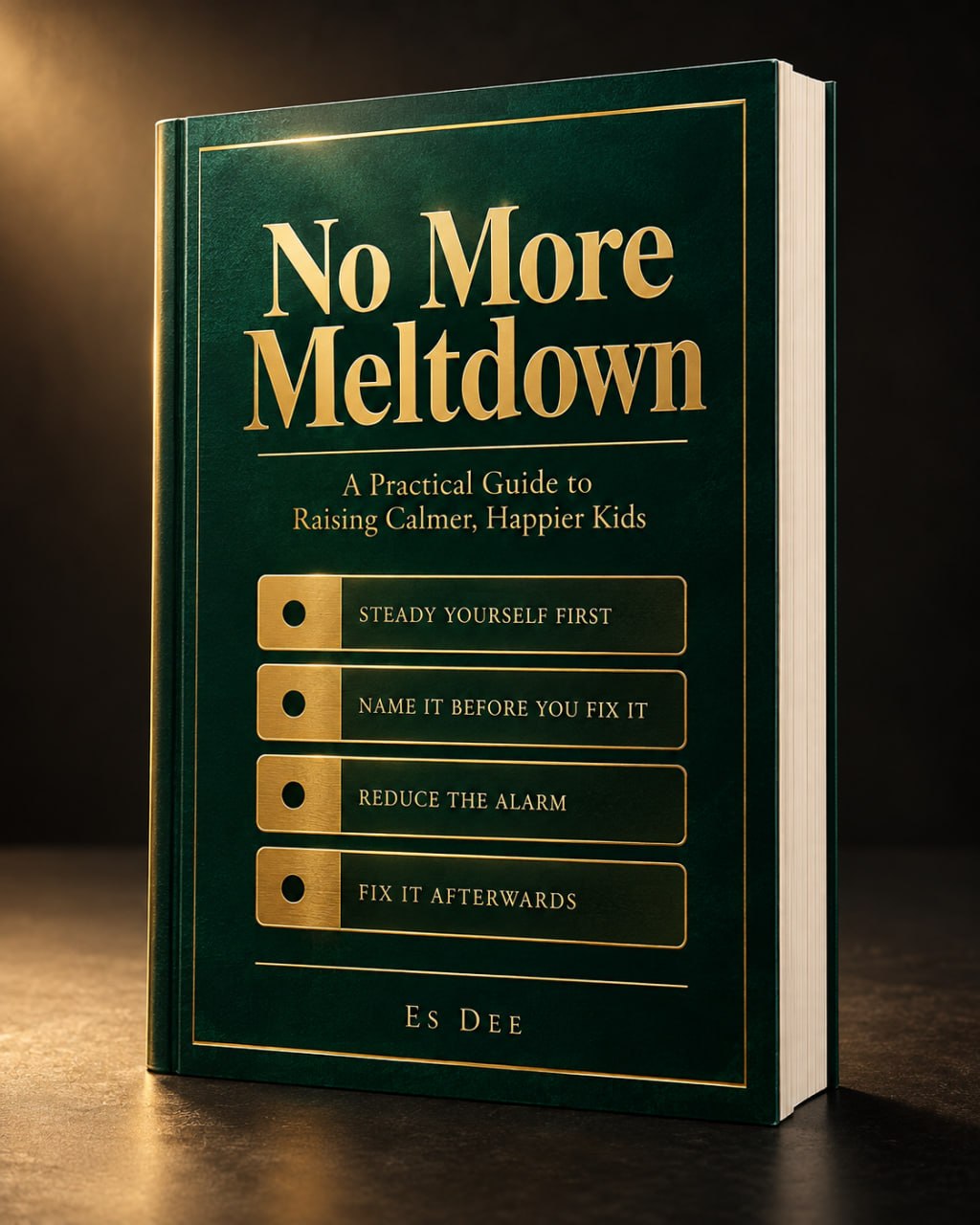
“Meltdown” is the word in the title. The situations inside are the ones you recognise: the shoes, the wrong cup, the difficult transition, the moment you do not know what else to say.
It is a digital parenting guide, delivered as a PDF. Here is what you can work through:
Notice what happens before the crying starts.
Triggers and early warning signs, giving you a starting point for understanding the pattern around an outburst.
Know what to try when your child is already screaming.
Step-by-step response techniques for the moment the crying, kicking, or shouting has already started.
Prepare for the everyday moments that keep going wrong.
Daily routines and communication habits intended to help reduce common points of friction.
Help your child express frustration in safer ways.
Ways to support healthier expressions of anger, frustration, and disappointment.
Keep your boundaries without making every moment a battle.
Setting boundaries, staying consistent, and working towards a warmer parent–child relationship.
Is this what you are looking for?
For the parent who wants something practical to work through.
- You recognise the crying, screaming, and resistance around everyday requests.
- You want to understand recurring triggers and prepare your response.
- You want to hold boundaries while working on how you handle difficult moments.
- You are looking for digital guides you can read and return to as you practise.
Two practical extras · included
One extra for the sibling fights. One for the moment you need a quick reminder.
Both companion guides are included in the ₦6,500 bundle. You do not pay separately for either bonus.
The Meltdown First-Aid Guide
“What can I try right now?”
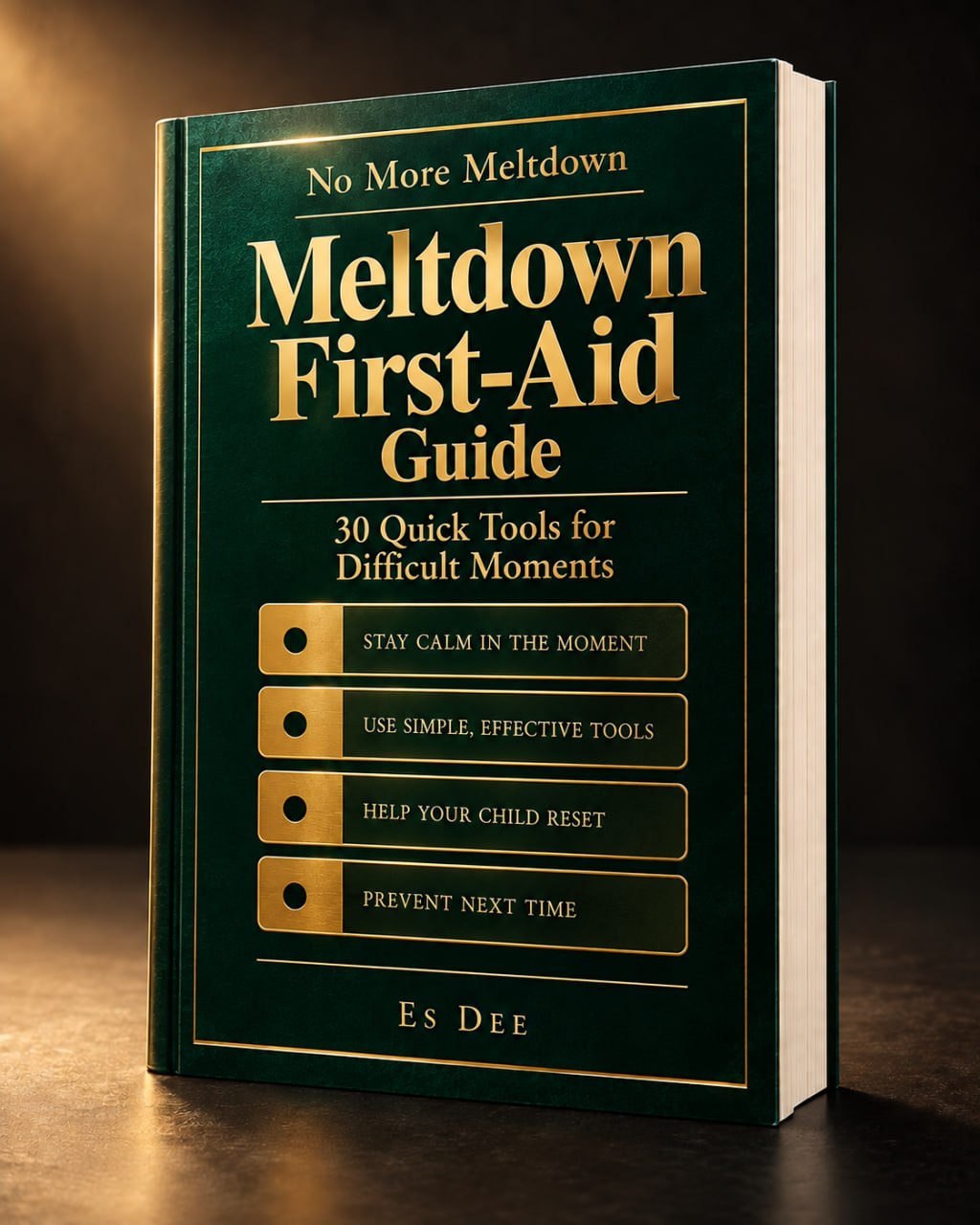
30 quick tools for difficult moments. A shorter reference to revisit when you need a reminder of what to try next, without searching through the whole main guide.
The Sibling Peace Guide
“Mummy! He took my own!”
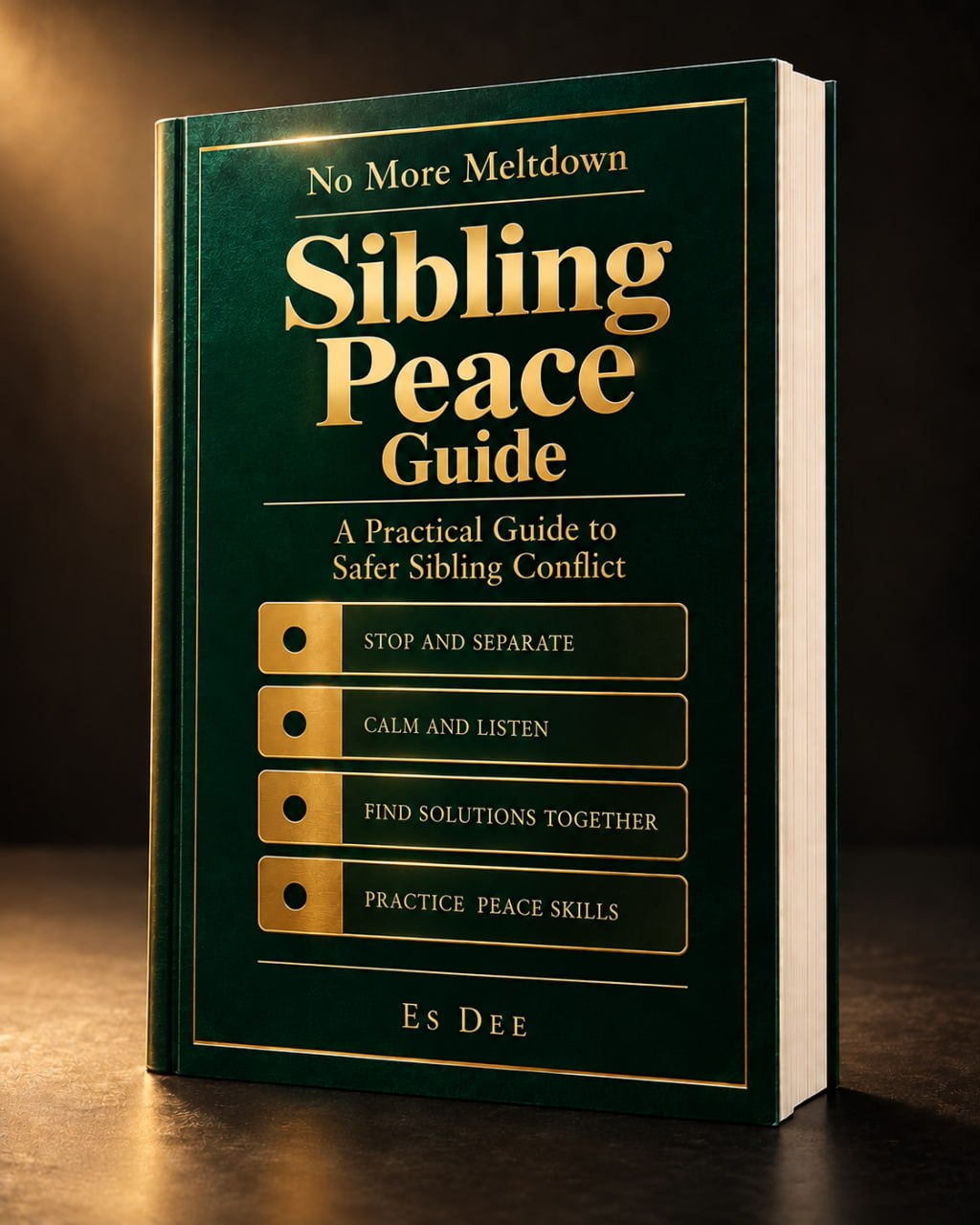
When an argument over a toy turns into shouting and you are pulled in again. A companion guide to handling sibling conflict more safely when more than one child is involved.
The main guide gives you the explanation and response steps. The First-Aid Guide provides a quick reference. The Sibling Peace Guide focuses on difficult moments between siblings.
Picture a more prepared response
The next time the crying starts, have somewhere to turn.
The goal is not to make every morning smooth or every “no” easy to hear.
It is to start recognising familiar triggers. To have read the response steps before the moment arrives. To know where your quick-reference guide are when you need a reminder.
And to work on a response you feel better about practising, even while your child is still learning to handle frustration.
What your ₦6,500 gives you
A resource for the moment you keep facing.
Before buying, think of the situation that brings you here. Is it getting ready for school? Turning off the television? The argument between siblings that pulls you away from everything else?
| When you need help with… | Start here |
|---|---|
| The same everyday request turning into crying and shouting | Main parenting guide Triggers, response steps, routines, and boundaries. |
| Arguments between the children | Sibling Peace Guide The companion resource for sibling conflict. |
| A quick reminder of what to try | First-Aid Guide 30 tools for difficult moments. |
You can begin with one recurring situation, then return to the other sections as you need them.
What you receive for ₦6,500
Get the main guide and both bonuses for ₦6,500.
- No More Meltdown — the main parenting PDF
- The Meltdown First-Aid Guide — Bonus 1: 30 quick tools
- The Sibling Peace Guide — Bonus 2
TOTAL FOR ALL THREE GUIDES · ONE-TIME PAYMENT
₦6,500
Download the bundle after payment and start with the section that matches the situation you are facing most often.
Get All 3 Guides · ₦6,500₦6,500 total · Both bonuses included · Digital PDFs
Pay securely through Selar. No physical books will be delivered.
Getting started
After downloading, choose the moment you want to handle differently.
- Get your bundle. Complete your order through Selar and check your delivery email.
- Choose one situation before you start reading. Think of the school-morning rush, switching off cartoons, or another moment that keeps ending in tears. Read the sections on triggers and response techniques with that situation in mind.
- Keep the First-Aid Guide handy. Save it somewhere easy to open when you need a reminder.
- Return to the guide as you practise. Use the sections on routines, emotions, and boundaries to support your next steps.
You do not need to read everything while your child is upset. Give yourself a quieter moment to become familiar with the material first.
Before you decide
Questions you may be asking.
Is this another collection of “just be patient” tips?
The offer includes response steps and scripts, alongside material on triggers, routines, emotions, and boundaries. The First-Aid Guide provides 30 quick tools for difficult moments.
Does responding calmly mean giving in?
The guide includes setting boundaries and staying consistent. Its focus is on how to respond during difficult moments while continuing to work on those boundaries.
What if I have already tried several approaches?
You can assess the contents above against what you have already used. This bundle puts practical response techniques and companion reference guide together; it does not promise that one approach will suit every child.
Will the crying stop immediately?
No immediate or fixed-time result is promised. This is a parenting resource to read and practise with. Each child and family situation is different.
Is ₦6,500 for everything, including the bonuses?
Yes. One payment of ₦6,500 covers the main No More Meltdown guide, the Sibling Peace Guide, and the Meltdown First-Aid Guide with 30 quick tools.
How will I receive it?
This is a digital PDF bundle, not a printed book. After successful payment, check your email for the delivery and access details.
What about the refund promise?
Es Dee’s existing offer promises a full refund if you read the guide and feel it was not worth what you paid. Review the seller’s refund and contact details on the Selar checkout before purchase.
Can this replace individual professional support?
No. This is an educational parenting resource. If behaviour is unsafe, severe, or persistent, or you have concerns about your child’s development, seek qualified individual support.
A different starting point
Tomorrow may still bring a difficult moment. You can prepare for it today.
It might be the same request to put on shoes. It might be the same disappointment when the answer is no.
Buying a guide does not remove those moments from family life. What it gives you is a resource to open before they happen, steps to become familiar with, and a quick-reference guide you can keep nearby.
The first move is small: choose the situation you keep returning to, read the relevant material, and decide where you will keep your quick reference.
That is a more concrete starting point than promising yourself, once again, that tomorrow you will somehow have more patience.
For the next difficult moment
You want to respond differently. Give yourself something practical to work with.
Perhaps it is the crying before school. Perhaps it is the screaming after “no.” Perhaps it is hearing your own voice get louder and wishing you knew what else to do.
Choose the situation you recognise. Read the relevant steps. Keep the First-Aid Guide within reach. Start building familiarity with a response you can practise.
No More Meltdown + both bonuses: ₦6,500.
Get All 3 Guides · ₦6,500₦6,500 total · Both bonuses included · Digital PDFs
Pay securely through Selar. No physical books will be delivered.
P.S. If the words “meltdown” or “emotional regulation” are not the words you use at home, that is fine. The guide is about the crying, screaming, frustration, and difficult responses you already recognise.
P.P.S. The First-Aid Guide and Sibling Peace Guide are included in the ₦6,500 bundle. Save the guides where you can find them easily after you download.